Revenue operations for supply chain companies
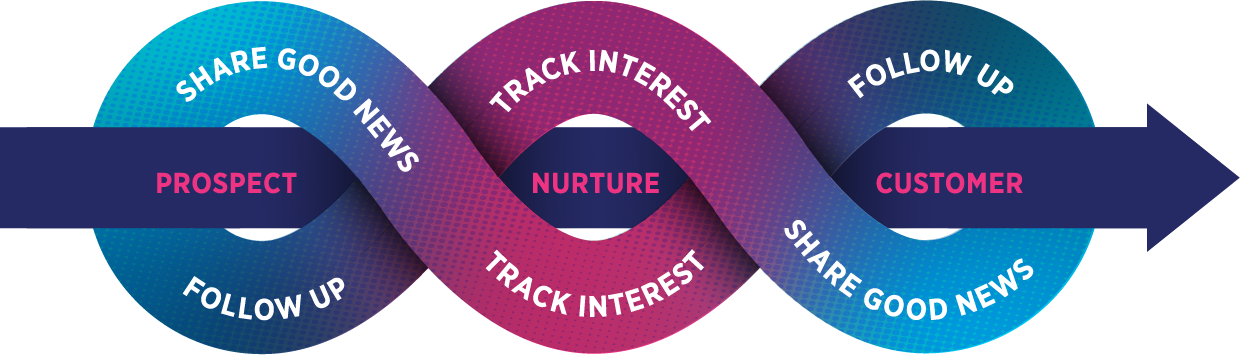
Revenue operations connects your CRM, martech, intent data, sales process, and reporting, so your team knows who is interested, what to do next, and what is actually driving pipeline. It is the system behind the Revenue Engine: share good news, track interest, follow up.

HubSpot Diamond Solutions PartnerWe build and run HubSpot for freight, logistics, and supply chain companies.
Share good news. Track interest. Follow up.
The Revenue Engine is how LeadCoverage runs every program. PR, analyst relations, and demand generation share the good news. Revenue operations makes sure someone knows who paid attention, and that someone acts on it. Each step is measured in volume, velocity, and value.

Tech Stack 2027: What Your Company Actually Needs vs. the Hype
Wednesday, November 4 at 11:00 AM ET, 45 minutes. Presented by Kara Smith Brown, Chief Executive Officer, LeadCoverage. Kara was one of the first employees at Echo Global Logistics, and her name is on its 2009 IPO press release. She covers the martech and CRM stack for supply chain leaders, which is the same stack revenue operations connects and runs.
See who is paying attention
CRM records, intent data, and web activity sit in one place, so interest shows up by account instead of hiding in separate tools.
Get every signal to the right seller
Routing rules, sequences, and task triggers move interest to a seller fast. This is where velocity is won or lost.
Report on volume, velocity, and value
Reporting ties activity to pipeline and closed revenue across the prospect, nurture, and customer funnels.
Your Revenue Engine runs on your data
Routing, sequences, intent scoring, and reporting all depend on clean account and contact records. Weak data means missed signals, misrouted leads, and reports nobody trusts. Here is an example data structure: three sources, each with a different job. Other sources can fill these roles, depending on your buyers and your CRM.
Account and contact data plus intent, so sellers know who to call and why now.
Pulls from multiple providers, fills the gaps, and writes clean records into your CRM.
A third source to broaden coverage of the freight and logistics buyers you target.
We choose and configure the right mix with you.
You cannot go up the funnel
A funnel goes one way. Down. Moving records backward in a funnel creates havoc in your reporting, so a record that is not ready is disqualified out and starts again from the top. A clear ICP, a known TAM, and a behavior score that shows who is in market keep the funnel clean.
Four services, one connected stack
Start with the piece that is hurting most. Each service works on its own and gets stronger with the others.
MarTech audit and optimization
We assess your current stack, find the overlap, gaps, and broken handoffs, and recommend what to keep, fix, or retire.
CRM implementation
A CRM set up around how freight sales and marketing actually work, with integrations to your TMS and WMS where the shipment and customer data lives.
ABM integration
Target account lists, intent data, and outreach connected inside the CRM, so sales works the accounts already researching a solution like yours.
Revenue reporting
Dashboards that show pipeline created, how fast it moves, and what it returns, by source and by funnel stage.
Where is your team on the attribution ladder?
Most teams start in spreadsheets and climb one rung at a time. The higher you climb, the more clearly you can tie marketing to revenue. A MarTech audit shows you which rung you are on and what the next one takes.
- Full engagement ABM journey6sense predictive
- CRM + MAP + ABMProgrammatic advertising
- Targeted selling
- Google Ads, LinkedIn Ads experiments
- HubSpot MAP + CRM
- Mailchimp or Constant Contact experiments
- Microsoft or Google spreadsheets
Three industries, three Revenue Engine results
A Midwest freight broker replaced scattered marketing with a repeatable demand engine
HubSpot Marketing Hub live in 60 days, 17 MQLs in the first 90 days, and 99 MQLs in the first year.
Read the case study →A freight tech company used analyst relations to redefine its category
Five Gartner Market Guide features, a Magic Quadrant inclusion, and 35% lead conversion from analyst-backed content.
Read the case study →ITS Logistics turned an internal Port Rail Ramp Index into pipeline
A monthly index cited by CNBC and Reuters reached Fortune 500 shippers and drew $4.2M in Q1 2023 opportunities.
Read the case study →Built on the platforms your team already uses


Revenue operations, answered
What is revenue operations?
Revenue operations connects your CRM, martech, intent data, sales process, and reporting into one system, so your team knows who is interested, what to do next, and what is driving pipeline. It is the system behind the Revenue Engine: share good news, track interest, follow up.
Why does data matter so much?
Routing, sequences, intent scoring, and reporting all run on account and contact records. When the data is wrong, signals get missed, leads get misrouted, and reports lose credibility with your executives. Here is an example data structure: ZoomInfo or SalesIntel for sales intelligence, Clay for enrichment and orchestration, and Selling.com for contact data. Other sources can fill these roles.
Which metrics should we report on: vanity or meaningful?
Vanity metrics are easy to count and easy to report. Meaningful metrics connect to business outcomes. Shift the focus and your team makes decisions from data that contributes to growth, not from numbers that only look good.
Page views vs. conversion rate. Page views show how often a page was viewed, not what that did for your business. Conversion rate shows the share of visitors who took a targeted action, such as requesting a quote or subscribing, which ties directly to outcomes.
Followers vs. engagement rate. A large following can mislead if nobody engages. Engagement rate shows how your audience interacts with your content. Knowing who is following you matters too, and social tools can help you measure that audience.
Open rate vs. click-through rate. Opens do not show whether the content worked. Clicks are a more direct measure of interest. Add UTM coding to every link and you can start to show attribution or influence per campaign.
Impressions vs. ROAS. Impressions count how often an ad was shown, not whether it produced revenue. ROAS ties ad spend to revenue. It can be hard to measure outside ecommerce, but you can set a point of view and a goal to start.
Traffic vs. bounce rate and session duration. Heavy traffic means little if visitors leave quickly. Bounce rate and session duration show visitor quality and how your content holds attention.
How do volume, velocity, and value fit in?
They are the three numbers revenue operations reports on across the prospect, nurture, and customer funnels: how much, how fast, and how much it is worth. Reporting ties activity to pipeline and closed revenue so you can see what to do more of.
What is a MarTech Audit?
A review of your CRM, martech, data, and reporting to find what is working, what is not, and what to fix first. Book time with Jeff and we will scope it around your team.
Can this connect to our TMS or WMS?
It depends on your system and how it exposes data. We scope the integration during the audit, so you know what is possible before you commit to a build.
How an engagement starts
From first call to a running Revenue Engine
Discovery call
We listen to how you sell, who you sell to, and where your pipeline stalls.
Funnel assessment
We look at your prospect, nurture and customer funnels and the data behind them, and find the weakest link.
Scoped plan and SOW
You get a plan tied to volume, velocity and value, with clear deliverables.
Run and report
We run the work and report on what moves pipeline, not activity.
Book a MarTech audit
We review your HubSpot setup and CRM data and show you what is stalling follow up.